
A Water Bath for the Trast to Frozen Fish and Seafood and Thawing machines
For a direct comparison, obtain specifications for both machines using the same product and operating conditions.
| Highlighted rows show differences | 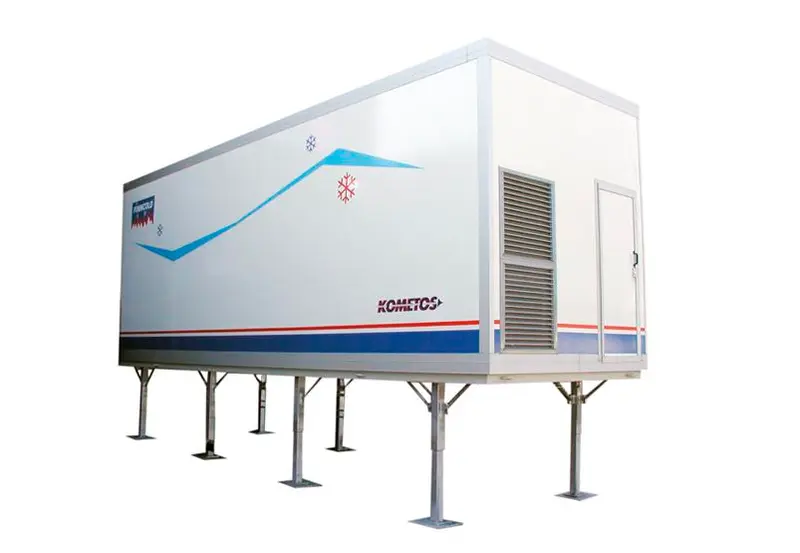 | 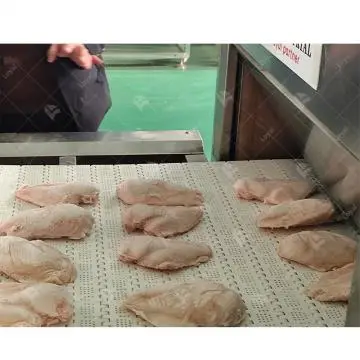 | ||
|---|---|---|---|---|
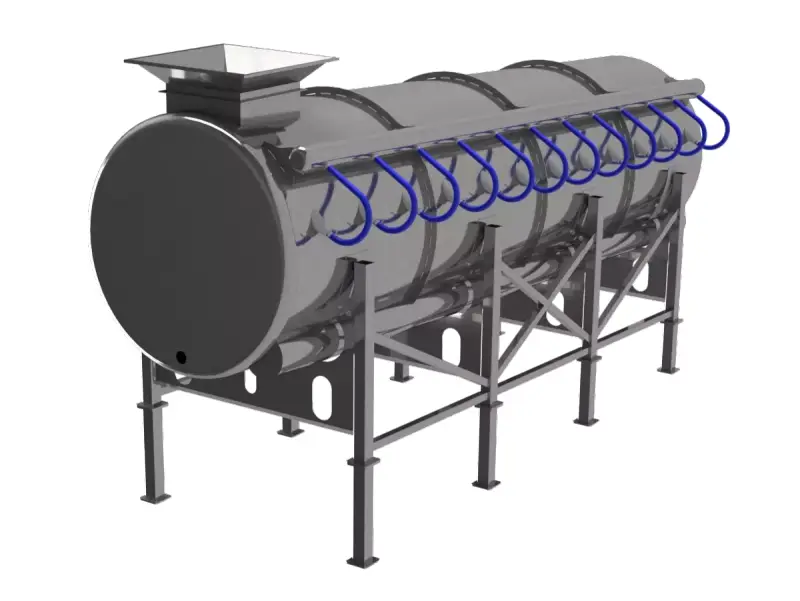
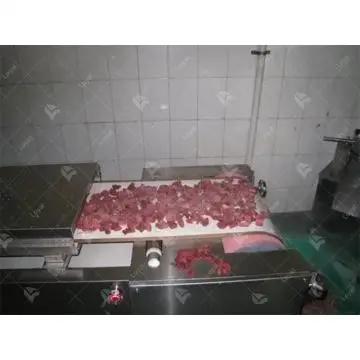
| Manufacturer | Traust | Kometos | Shandong Loyal Industrial | Shandong Loyal Industrial |
| Manufacturer country | Iceland | Finland | China | China |
| Equipment type | Thawing system | Thawing system | Thawing system | Thawing system |
| Power source | — | — | Three phase five wire 380V±5% 50Hz±1% | 380V±10% 50Hz±1% Three-Phase Five-Wire |
| Microwave frequency | — | — | 915MHZ | 915 MHz/2450 MHz |
| Shandong Loyal Industrial Co., Ltd. | — | — | Pasta, instant noodle and biscuit production machines | Pasta, instant noodle and biscuit production machines |
| Raw material | Frozen fish blocks, fish heads, shrimp and other seafood | — | — | — |
| Operating mode | Periodic or continuing | — | — | — |
| Materials | Stainless steel and polymer | — | — | — |
| Hinges | Heater, circulation pump and lift | — | — | — |
| Size | — | 1825 × 1725 × 3100 | — | — |
| Throughput | — | 1 trolley/sub-deck/process (max. 600 kg) | — | — |
| Area of activity | — | -20 °C…+2 °C | — | — |
| Time of thawing | — | Varies by product/by packaging, see thawing time table. | — | — |
| Weight of cabinet | — | Fail. 650 kilos. | — | — |
| Cooling | — | 3 kW (-8 °C / +32 °C) | — | — |
| Heating | — | 6 kW | — | — |
| Air circulation | — | EU receiver | — | — |
| Control system | — | PLC comet | — | — |
| Electrical connection | — | 3 × 400 V 32 A | — | — |
| Water connection | — | P 1 × 2 , min 4 bar | — | — |
| Compressed air supply | — | R ½", min. 2.8 bar | — | — |
| Structure | — | Outdoor-rated thawing container. The technical room at the rear of the container houses the control center, cooling unit, humidification water and compressed air control unit. The container comes with 8 height-adjustable legs to ease instal | — | — |
| Weight | — | Total weight appr. 4 500 kg | — | — |
| Plum connection | — | D 75 mm | — | — |
| Air traffic direction | — | Rising and lowering with a spindle motors | — | — |
| PLC Management | — | PLC Management: The Omron/KOMETOS Logic: The thawing system will be connected to the Ethernet data network of a client, through which Kometos will have the ability to secure the service connection. | — | — |
| Options | — | Freeze -6 °C capacity 3,000 kg | — | — |
| Range | — | -20 °C – +2 °C | — | — |
| Rated input power | — | — | 650KVA | — |
| Microwave output power | — | — | 75KW (Each part of power is adjustable) | — |
| Conveyor belt ground height | — | — | 700±50 mm | — |
| Transmission power | — | — | Frequency setting | — |
| Number of microwave thawing boxes | — | — | 3st | — |
| Microwave oven mode | — | — | Side phase broadband feed | — |
| Transformer cooling mode | — | — | Air cooling | — |
| Equipment microwave leakage standard | — | — | GB 5959.6-2008 Follow the sixth safety part GB 5959.6-2008. Electrical heating units: Safety specifications for industrial microwave heating equipment. Heating installations: Safety specifications for industrial microwave heating. | — |
| Electrical safety standard for equipment | — | — | GB 5226,1-2008 | — |
| Industrial applications | — | — | Products and raw material | — |
| Meat | — | — | Frozen Pork, beef, mutton, rabbit, etc | — |
| Bird | — | — | Frozen Chicken, duck, goose, etc | — |
| Seafood | — | — | Frozen Fish, shrimp, shellfish | — |
| Frozen products, Fruit and Vegetables | — | — | Frozen pizza, bread and baking, frozen carrots, broccoli, pumpkins, spinach, frozen strawberries | — |
| Goods | — | — | — | Description of details |
| Distribution | — | — | — | Water/air cooling |
| Monitoring | — | — | — | PLC |
| Intake power | — | — | — | 25-125 kVA |
| Traditional method of defrosting | — | — | — | Automatic machine for the yanking of frozen meat and beef in microwave oven |
| Air thawing method: air thawing is slow, thawing takes a long time, there are ma | — | — | — | Microwave thawing: Because microwaves can penetrate directly into the material to heat directly, no conduction process is required, and it only takes a few minutes to complete. Uniform heating, high utilization rate of heat energy, fast tha |
| Rapid thaw speed | — | — | — | Microwave can penetrate inside the material directly without heat conduction process.Therefore, the production efficiency is very high and the thawing time is greatly saved. |
| Non-polluting ingredients produced | — | — | — | Microwave thawing eliminated the thawing rooms and shelves, avoided water waste.The thawing process does not produce normal water, which is conducive to environmental cleanliness and hygiene, and the product quality is easy to control. |
| Equal tanning | — | — | — | Microwave thawing can cause the surface of the material to be subjected to microwave action and generate heat at the same time, so the thawing uniformity is good, and the situation of not thawing outside and not thawing inside is greatly re |
| Keep the food fresh | — | — | — | The characteristics of microwave rapid thawing prevent the materials from breeding bacteria. |
| Reduce the meat loss | — | — | — | Both natural thawing and water thawing will produce blood water, and the rate of meat loss is 5%-10%. But the microwave thawing will not produce blood water,and the rate of meat loss is less than 1%. |
| Simple management | — | — | — | PLC control or control button, ease of use |
| Safe and harmless | — | — | — | Microwave thawing works in a closed chamber made of metal, the body and conveyor belt can be fully rinsed, so the work environment can be kept clean. |
For a direct comparison, obtain specifications for both machines using the same product and operating conditions.
For a direct comparison, obtain specifications for both machines using the same product and operating conditions.
For a direct comparison, obtain specifications for both machines using the same product and operating conditions.
For a direct comparison, obtain specifications for both machines using the same product and operating conditions.
For a direct comparison, obtain specifications for both machines using the same product and operating conditions.
Compare the values for power source when choosing between the two models. Request throughput data for your product.