
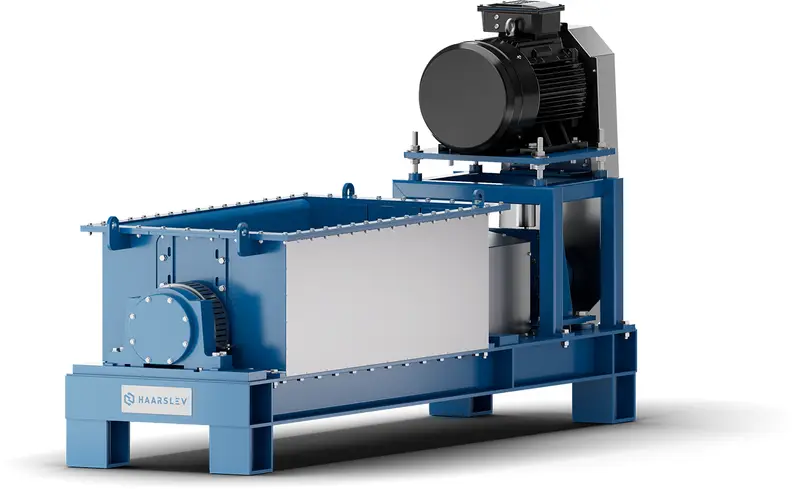
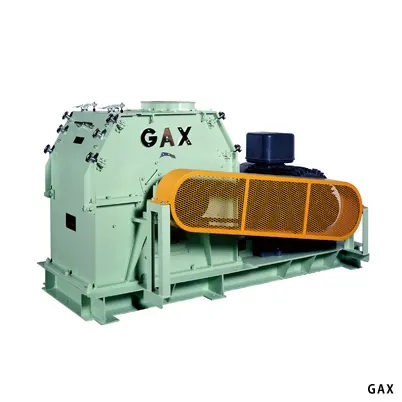
Low-revolving bone and ware waste chopper Haarslev and High-speed hammer for the OMC GHX-200
For a direct comparison, obtain specifications for both machines using the same product and operating conditions.
| Highlighted rows show differences | 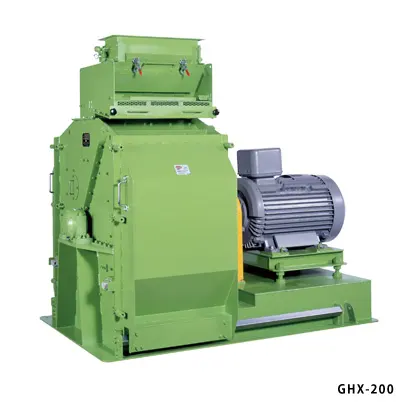 |  | ||
|---|---|---|---|---|
| Manufacturer | Haarslev | OMC CO., LTD. | CNYJ Machinery | OMC CO., LTD. |
| Model | — | GHX-200 | — | GAX |
| Manufacturer country | Denmark | Japan | China | Japan |
| Equipment type | Mill or crusher | Mill or crusher | Mill or crusher | Mill or crusher |
| Throughput, kg/h | 50,000 | 22,000 | 20,000 | 18,000 |
| Power, kW | — | 160 | 30 | 55 |
| Product Size | less than 30 mm | — | — | — |
| Model productivity | 6–50 t/h | — | — | — |
| Gross | 1 or 2 | — | — | — |
| Drive protection | Electronic rotation sensor | — | — | — |
| Engine power | — | 132–160 kW | — | — |
| Speed at 50 and 60 Hz | — | 1500 and 1800 rpm | — | — |
| Production on feed at re-moldering | — | 22 t/h at 160 kW and sieve 2 mm | — | — |
| Corn productivity | — | 10 t/h at 160 kW and 2 mm sieve | — | — |
| Throughput | — | — | 1–20 t/h | — |
| Scrubbery | — | — | A hammer or a knife | — |
| Openings of replacement sieves | — | — | 3–12 mm | — |
| Material | — | — | Food-grade SUS304 Stainless Steel | — |
| Motor power | — | — | 2.2–30 kW | — |
| Power | — | — | — | 37–55 kW |
| Rotor speed | — | — | — | 1800 rpm |
| Cith openings | — | — | — | 2–70 mm |
| Mass of shell | — | — | — | 570 kg |
| Productivity at 37 kW | — | — | — | Sorghum 15 t/h at 4 mm, corn 18 t/h at 6 mm |
For a direct comparison, obtain specifications for both machines using the same product and operating conditions.
If throughput is your priority, Low-revolving bone and ware waste chopper Haarslev has the higher stated figure. Confirm performance with your own product.
For a direct comparison, obtain specifications for both machines using the same product and operating conditions.
Allow for the higher stated power of High-speed hammer for the OMC GHX-200 when sizing the electrical supply, and check the connection requirements.
For a direct comparison, obtain specifications for both machines using the same product and operating conditions.
For a direct comparison, obtain specifications for both machines using the same product and operating conditions.