How to choose a vacuum packaging machine for meat, cheese and fish
Compare chamber type, sealing bars, chamber depth, pump, gas flushing and washdown requirements before choosing a vacuum packaging machine.
At a glance
Start with the largest bag and the packs required per shift. Bag width and product height determine sealing-bar length and chamber depth. Output determines whether a benchtop, double-chamber or conveyor machine is appropriate. Then compare pump capacity, gas flushing and cleanability. The Cehmash catalogue listed 69 vacuum packaging machines from 19 manufacturers, from benchtop units with 250 mm bars to conveyors with a 1,225 × 1,070 mm chamber.
First size the machine to your bags and shift output. Then compare the pump, gas flushing and cleanability. Catalogue figures below refer to November 2026.
Step 1. Match bags to sealing bars and the chamber
Start with the largest bag you use.
- Sealing-bar length: The bar must cover the full bag opening with room to spare. Catalogue examples range from 250–260 mm on benchtop units to 400–600 mm on floor-standing units and up to 870 mm on large double-chamber machines.
- Bar arrangement: Two parallel bars can seal two rows of bags. An L-shaped arrangement can suit long bags for sausage logs. The MAGIKON DZ-800/2L has bars of 560 and 650 mm.
- Chamber depth: Check the maximum product height. DMS lists up to 100 mm for the DMV 271, 180 mm for the DMV 401, 220 mm for the DMV 461 and 230 mm for the DMV 620 LL.
Step 2. Choose a machine for your shift volume
| Volume | Machine type | Catalogue examples |
|---|---|---|
| Tens of bags per day | Benchtop single-chamber | MAGELLANIC WPC-260T, 250 mm bar and 17.5 kg machine weight |
| Batches throughout the day | Floor-standing single-chamber | Stainless steel DZ-400T, two 400 mm bars and a 420 × 440 × 130 mm chamber |
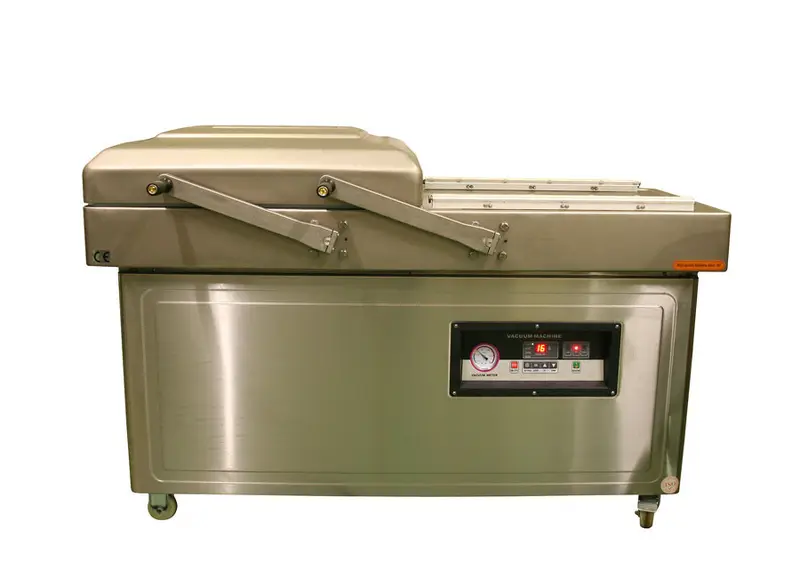
| Packing throughout the shift | Double-chamber | DZ-500/2SB, four 490 mm bars. Volvac W100, 15–25 s cycle |
| Continuous line | Conveyor machine | Volvac W110 C, 1,225 × 1,070 × 220 mm chamber and 2 cycles/min |
Divide packs per shift by packs per cycle, then divide by cycles per hour to estimate machine running hours. If the result is more than 5–6 hours for a single-chamber unit, compare a double-chamber machine.
Step 3. Compare the vacuum pump
The pump affects cycle time and needs regular service.
- Capacity in m³/h: IJIZA single-chamber units and the Volvac W42 list 20–21 m³/h. The Volvac W100 lists 105 m³/h and the Supervac GK 293 up to 300 m³/h.
- Pump type: Oil-lubricated pumps need scheduled oil changes. Dry pumps avoid oil changes but can cost more. Ask for the manufacturer’s service schedule.
- Moisture: Fish and marinated meat can release moisture during evacuation. Ask how the machine protects the pump.
Step 4. Consider how the product behaves
| Product | What to check |
|---|---|
| Cuts of meat | Chamber depth, gradual air re-entry, shrink bags and a shrink tank for a close fit |
| Bone-in meat | Reinforced bags and gradual air re-entry |
| Whole sausage logs | Long or L-shaped sealing bars |
| Hard cheese | Shrink bags and reliable sealing. Use suitable bags if the cheese will mature in the pack |
| Soft cheese and sliced products | Gas flushing or rigid trays to protect product shape |
| Fish | Stainless steel chamber, washdown provisions and moisture protection for the pump |
A shrink tank follows the vacuum machine. It dips the sealed bag into hot water so that the film shrinks around the product. Catalogue examples include the Supervac AS 660 and AS 860.
Step 5. Check construction and utilities
- Materials: Confirm whether the body and chamber are stainless steel and whether the lid is acrylic.
- Electrical supply: Even within the MAGIKON double-chamber range, the DZ-500/2SB lists 220 V and the WPC-500/2SA and WPC-600/2SB list 380 V.
- Controls: Check recipe storage, the vacuum sensor and the oil-change indicator.
- Floor space: Double-chamber examples such as the DZ-500/2SB and WPC-600/2SB are 1.25–1.4 m long. A conveyor machine can exceed 3 m.
Questions to ask the supplier
- What are the bar length, distance between bars and usable chamber depth?
- How many cycles per hour can it run with my product and bag?
- Which pump does it use? What is its capacity and service interval?
- Can the machine flush with gas and admit air gradually after sealing?
- What are the body, chamber and lid made from?
- Does the machine require 220 or 380 V?
- Who stocks the bags my machine needs?
- Where are spare parts stocked, and who services the pump?
When to consider another packaging method
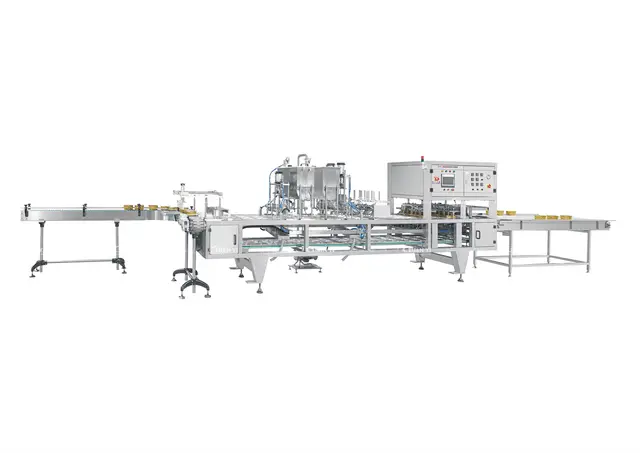
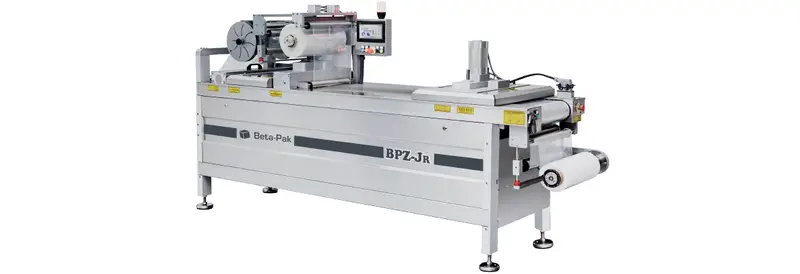
Choose a tray sealer or thermoformer if sliced products, mince or prepared foods need a tray and modified atmosphere. A thermoformer can lower the per-pack cost on a high-volume, stable line. For soft products, confirm how the packaging method protects their shape.
Common mistakes
- Choosing chamber dimensions without checking the height of the packed product.
- Sizing a single-chamber machine for continuous work across the shift.
- Comparing machines without checking pump capacity and service.
- Buying a machine before confirming that bags are available in the required size.
What the catalogue lists
At publication, Cehmash listed 69 vacuum packaging machines from 19 manufacturers. The largest groups were from Russia (31), China (9) and Türkiye (7). MAGIKON had 21 listings. The current count for the Russian supply market is 61 models.
See the vacuum packaging machine pricing guide or alternatives to Supervac. For tray packs, see the tray sealer pricing guide. Browse vacuum packaging machines or describe your product and output in the equipment finder.
Frequently asked questions
01Which vacuum packaging machine suits bone-in meat?
The chamber must fit the full height of the cut, and the bag must withstand sharp bone edges. Ask about gradual air re-entry after sealing to reduce the risk of punctures. Reinforced bags are available for bone-in products.
02How can I pack soft cheese without crushing it?
Vacuum can deform soft cheese. Consider gas flushing or a tray sealer with a rigid tray. MAGIKON lists gas flushing for models such as the DZQ-400T and DZQ-500/2SB.
03Should I choose a stainless steel chamber for fish?
Stainless steel is practical when operators frequently wash down the chamber after packing fish or meat. Some models have an acrylic lid, which costs less but needs careful cleaning. Check the chamber, body and lid materials separately.
04Do I need one chamber or two?
One chamber can suit intermittent batches. If the machine runs throughout the shift, a double-chamber unit lets the operator load one chamber while the other runs.
Live catalogue counts update automatically. Other model and manufacturer information reflects the catalogue at publication. Ask suppliers for prices and lead times. Found an error? Contact us.
Vacuum packaging machines in the catalogue
All models
MAGIKONRussia
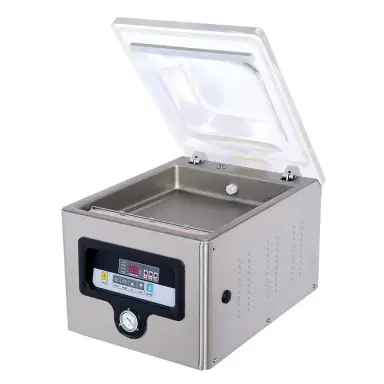
DZ-500/2SB Vacuum-packing machine
Removes air from the pack before sealing.
MAGIKONRussia
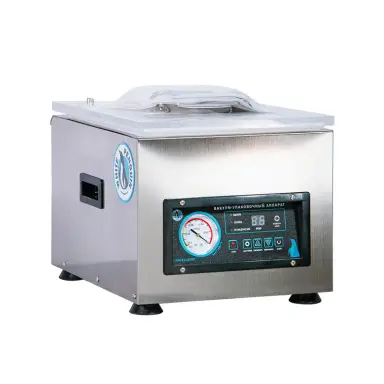
DZ-260 PD Vacuum-packing machine
Removes air from the pack before sealing.
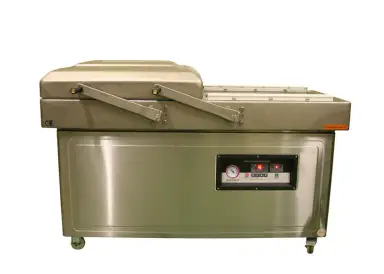
MAGIKONRussia
MAGELLANIC WPC-260T Vacuum-packing machine
Removes air from the pack before sealing.
MAGIKONRussia
DZ-600/2SB Vacuum-packing machine
Removes air from the pack before sealing.