Equipment for pasta production, from mixing to packing
Dry pasta production includes flour dosing, mixing, extrusion through a die, cutting or hanging, drying, stabilising and packing.
At a glance
Dry pasta production includes flour dosing, mixing, extrusion through a die, cutting or hanging, drying, stabilising and packing.
Pasta is made from flour and water, but the technology requires precise equipment: the dough is molded under pressure through a die and then slowly dried according to a schedule. A mistake in drying causes cracks and brittleness, which is why a dryer is as important a machine as a press.
Below is equipment for dry pasta in stages. Model numbers are based on the Cehmash catalog as of the date of publication. Pasta machines are scattered across sections: presses - in “Dumpling machines”, lines - in “Processing lines”, some - in “Other equipment”; search for “pasta” or “pasta”.
1. Preparing and dosing flour
For pasta, use durum wheat flour or premium baking flour. The flour is sifted and precisely dosed together with water - the quality of the dough depends on the ratio.
- Sifter — 86 models;
- Container or silo for storing flour - 397 models;
- Dispenser for flour and water - 326 models.
2. Kneading and press molding
In a pasta press, flour and water are mixed, the dough is compacted by a screw under vacuum and pressed through a die. The shape of the die holes determines the type of product.
Presses and machines for pasta in the catalog are often located in the section “Dumpling machines” — 122 models from 40 manufacturers, most of them are for dumplings. Examples:
- compact pasta making machine MPC Japanese Fujiseiki;
- line of short-cut pasta E.N.A. Italian AXOR;
- equipment for the production of pasta Russian Kolaks-M.
The vacuum in the press removes air bubbles: the product is dense and yellow, without white spots. Check with the supplier whether there is a vacuum chamber and what material the die is made of.
3. Cutting and layout
Short products are cut by a knife at the die. Long ones are hung on rods and cut after drying. The noodles and nests are formed into separate units.
4. Drying
Drying occurs in several stages: preliminary drying, main drying and stabilization. The modes are set by the line manufacturer for a specific product and flour.
| Product | Dryer type |
|---|---|
| Short | drum or multi-tiered belt |
| Long | tunnel with suspension on rods |
| Nests and noodles | tape or chamber |
| Small workshop | cabinet or chamber with trays |
Dryers are collected in the section dryers — 299 models from 65 manufacturers, but most of them are for vegetables, fruits and other products. Pasta dryers are usually included in the line - check the drying mode and time with the supplier.
5. Cooling and storage
After drying, the products are cooled to workshop temperature and kept in storage bins before packaging. If you pack warm pasta, moisture will condense in the bag.
6. Packing
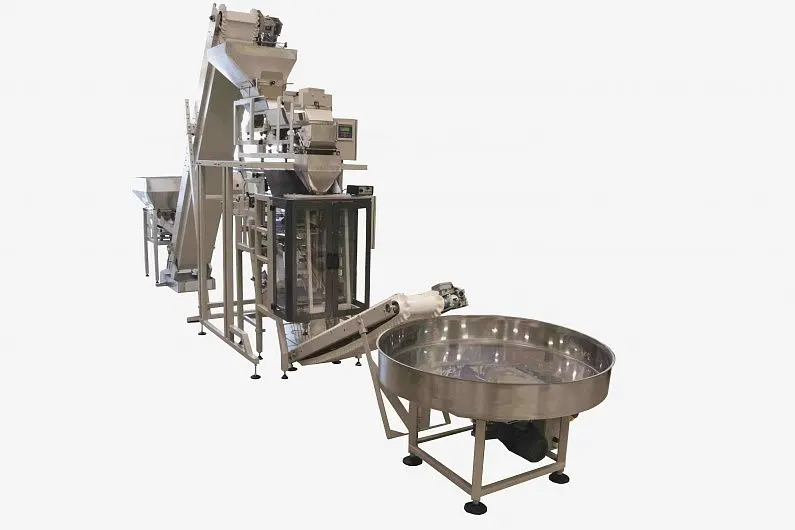
Short pasta is packaged in bags using weighing dispensers, long pasta is packaged with special scales and automatic machines.
- Weighing equipment — 128 models, for example multi-head weigher for long pasta;
- for spaghetti - automatic scales FTL-2 and filling machine MS130 Italian Ricciarelli;
- Horizontal flow wrapper — 77 models.
Complete lines
For continuous production, a line is taken from one manufacturer: the press, drying and storage devices are coordinated in terms of productivity. In the section “Technological lines” — 644 models. The Italian Fava and Storci The catalog contains line listings for the production of pasta. Examples of Fava lines: short paste line from 100 to 1200 kg/h and long paste line from 100 to 700–800 kg/h — the ranges are indicated by the manufacturer in the title.
Fresh pasta
Fresh pasta is a different process: molded, sometimes pasteurized, cooled and packaged in a protective atmosphere. For example, GEA has molding machines for it: C540. For pasta with filling (ravioli, tortellini) you need machines similar to dumpling machines - see hub “Equipment for the production of dumplings».
Checklist before purchasing
- Assortment: short, long, nests, fresh pasta.
- Press productivity in kg/h and drying coordinated with it.
- Number and material of dies supplied.
- Area and ventilation for drying.
- Who gives the drying modes and launch of the line.
- Declaration TR CU 010/2011 for machines; products - according to TR CU 021/2011.
Common mistakes
- Buy a press without a dryer. The press produces a raw product, which, without controlled drying, cracks or becomes moldy.
- They dry faster than necessary. Accelerated drying causes cracks and brittleness.
- Warm pasta is packaged. Moisture condenses in the bag.
Will collect a selection to fit your volume equipment selection.
Frequently asked questions
01What is the minimum equipment needed for a pasta shop?
A press with a dough mixer and a set of dies, a cabinet or chamber dryer with temperature and humidity control, trays or frames for drying and a weighing dispenser with sealing bags. Compact presses for small workshops are in the catalog, for example, from Japanese Fujiseiki and Chinese manufacturers.
02What is the difference between equipment for short and long pasta?
Short products (horns, feathers, shells) are cut with a knife at the die and dried in drum or belt dryers. Long ones (spaghetti, noodles) are hung on rods and dried in a tunnel - this is a longer line and separate cutting after drying.
03Do you need a dryer for fresh pasta?
No, fresh pasta is not completely dried: it is molded, sometimes pasteurized, cooled and packaged in a modified atmosphere. It requires molding machines, a pasteurizer and a packer, and not many hours of drying.
04Where to find suppliers?
Open the line or machine listing in the Cehmash catalog and look at the “Where to buy” block. The “Supply Market” filter will show models supplied to your country. The application from the listing is stored in Cehmash, and Cehmash helps to contact suppliers.
Sources
Live catalogue counts update automatically. Other model and manufacturer information reflects the catalogue at publication. Ask suppliers for prices and lead times. Found an error? Contact us.
Processing lines in the catalogue
All models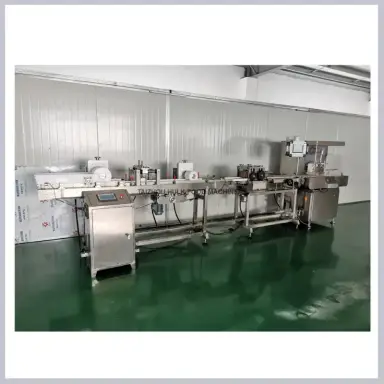
TAIZHOU HULK FOOD MACHINERY CO. LTDChina
Small grain bar of protein bar Granola bar cutting line
Combines equipment for successive processing stages. Power — 3 kW.
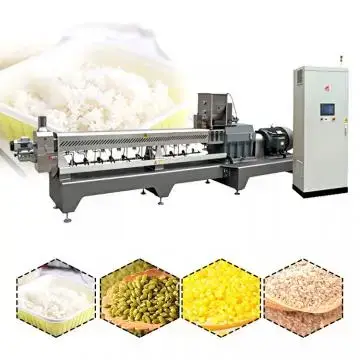
Shandong Loyal IndustrialChina
Fortified Rice Kernel Extrusion Line
Forms a rice-based mixture containing added nutrients into rice-shaped kernels.
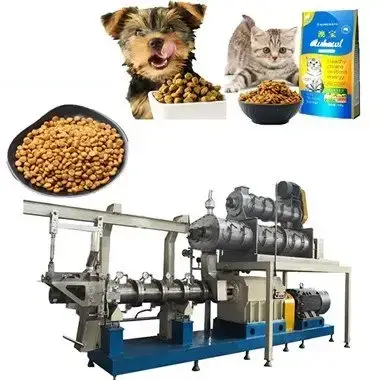
SHANDONG FORWARD MACHINERY CO. LTDChina
Extrusion Line for Pet and Fish Feed Pellets
Combines equipment for successive processing stages. Power — 5.5 kW.
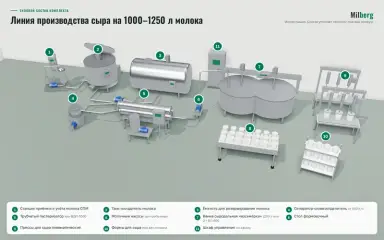
MilbergRussia
Milberg cheese production line for 1000–1250 L of milk
Combines equipment for successive processing stages.