Canned meat production equipment by processing stage
Plan a shelf-stable canned meat line, from cutting and filling to double seaming, retorting and packing. Compare equipment and supplier quotes.
At a glance
A shelf-stable canned meat line needs equipment to prepare the meat and containers, fill and seal the packs, thermally process them in a commercial retort, and label and pack the finished product. Choose the container and have a qualified thermal process authority establish the process schedule before sizing the filler, seamer and retort.
Start with the product, container and required output per shift. A chunky stew in a metal can and finely minced meat in a glass jar can need different fillers, closures and retort cycles even at the same net weight.
Equipment by stage
| Stage | Typical equipment | What to specify |
|---|---|---|
| Prepare meat | Cutting tables, deboning tools, saw, dicer, grinder or bowl cutter | Cut size, trim yield and throughput on the actual raw material |
| Cook or prepare sauce if required | Steam-jacketed kettle, agitator and transfer equipment | Working volume, heat-up time and discharge method |
| Prepare containers | Can depalletiser or manual feed, container rinser or washer | Container sizes and rinse method |
| Fill and close | Portion filler, liquid filler if required, double seamer or jar capper | Target fill, headspace, closure and inspection tools |
| Retort and cool | Commercial retort, baskets or racks, controls and cooling utilities | Established process, pack layout and full cycle time |
| Inspect, label and pack | Inspection bench, coder, labeller, case packer and pallet handling | Lot traceability, release procedure and shipping case |
Prepare the meat, sauce and containers
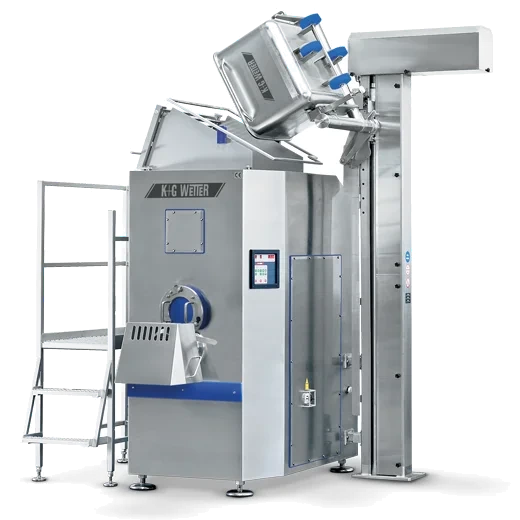
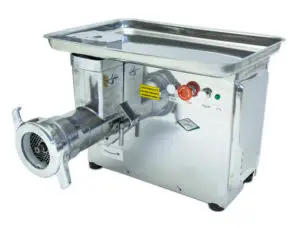
Choose the cutting equipment for the largest piece the recipe requires. Use a dicer for consistent pieces, a grinder for mince and a bowl cutter for finely comminuted products. Keep cutting, weighing and transfer capacity in step with the filler. If the recipe calls for precooking or separate gravy preparation, size the kettle by working volume and the time needed to heat, mix and empty a batch.
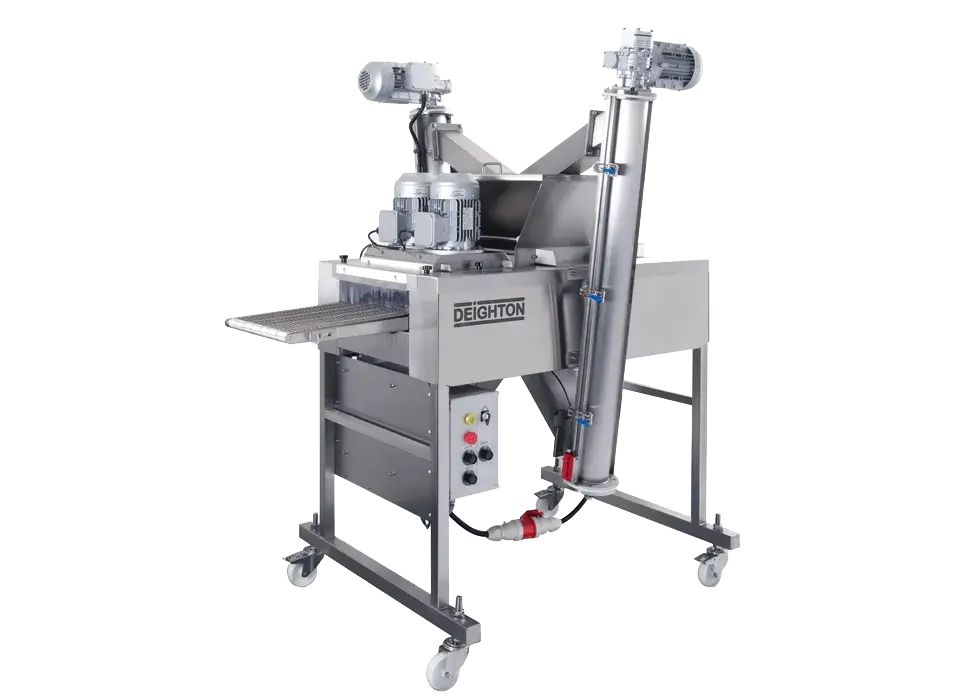
Feed empty containers through a handling and rinsing setup compatible with the pack. Decide how operators will remove damaged cans or jars before filling. For chunky products, trial the dosing equipment with meat pieces and sauce at production temperature. Some lines use separate solid and liquid filling stations. Check that trials reproduce the specified fill weight, solids-to-liquid ratio and headspace.
Match the closure to the container
A double seamer mechanically interlocks the can body flange and end. Specify the can and end together, then ask the seamer supplier for the corresponding tooling, changeover time and seam inspection equipment. For glass, specify the exact jar and closure and verify the capper’s performance on that pack. Include the ability to inspect and record closure integrity as part of the line design.
Size the retort for a full production cycle
Compare commercial retorts and sterilisers by usable basket capacity and the complete load-to-load cycle. Count loading, heat-up, thermal processing, cooling and unloading when you work out how many packs the retort can process per shift. Include changeovers and downtime when matching the seamer to the retort.
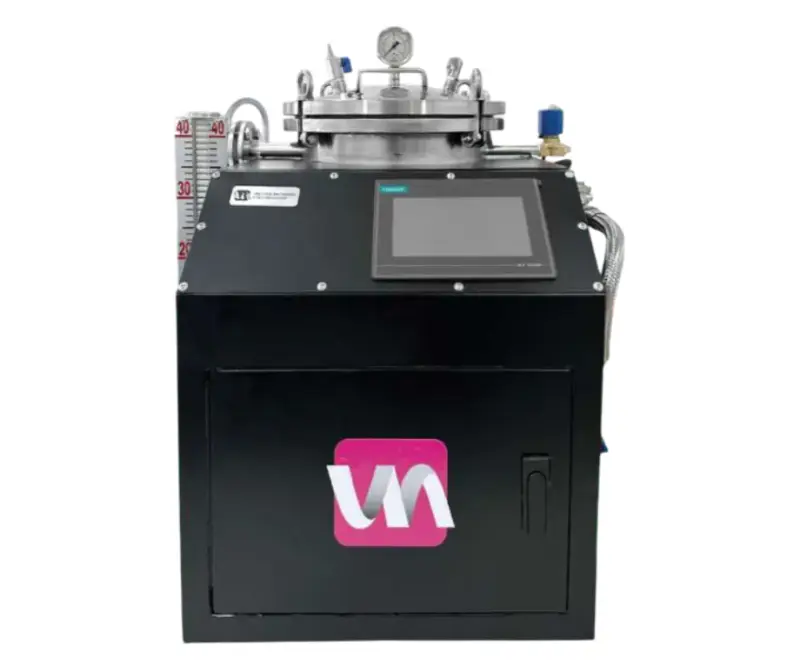
Ask the thermal process authority and equipment supplier to review heat distribution, heat penetration, container orientation and basket loading. Confirm the heating method, pressure control and the cooling arrangement for your pack. Consider agitation if the established process calls for it. Ask what the control system records and how operators identify and hold affected lots following a deviation. For US meat and poultry establishments subject to the canning rules, see 9 CFR Part 431 for process schedules, equipment, records and handling deviations.
After cooling, inspect and dry the packs as required, apply a readable lot code and send them to the holding area under your release procedure. Match the labeller and case packing equipment to the containers, case size and pallet pattern.
Where to source the line
- United States. Allpax publishes commercial batch retort options, including static and agitating designs. Start the preparation shortlist with grinders listed for the US.
- United Kingdom and Ireland. Pneumatic Scale Angelus UK provides a commercial food seamer example. Confirm tooling and service for the site postcode. Compare catalogue listings for kettles in the UK and kettles in Ireland.
- Canada, Australia and New Zealand. Browse grinders in Canada, grinders in Australia and dosing equipment in New Zealand. Confirm retort commissioning and pressure-vessel documentation separately for the installation site.
Request itemised prices for the machines, spare tooling, trials, validation support, freight and site commissioning. Give each bidder the same product, pack dimensions, output target and utilities. For a turnkey proposal, ask who is responsible for integrating the seamer, retort and traceability system. See the equipment buying guide by delivery market for more catalogue filters.
Frequently asked questions
01Can a cooking kettle replace a retort?
A kettle can cook meat, broth or sauce before filling. Shelf-stable low-acid meat in sealed containers needs a thermal process designed for the product, pack and retort load.
02Can a home pressure canner be used for commercial production?
Buy a commercial system with controls, instruments and records that meet the requirements for your process and facility. Have the thermal process authority review the exact installation before production.
03Can a line handle both metal cans and glass jars?
Some retorts can process both with suitable baskets, controls and separately established schedules. Metal cans need a double seamer. Glass jars need capping equipment matched to the jar and lid.
04Who sets the retort cycle?
A qualified thermal process authority establishes the schedule for the formulation, pack, fill and equipment. Changes to critical factors such as chunk size, fill weight or container dimensions should be reviewed before a new configuration is run.
Sources
Live catalogue counts update automatically. Other model and manufacturer information reflects the catalogue at publication. Ask suppliers for prices and lead times. Found an error? Contact us.
Retorts and sterilisers in the catalogue
All models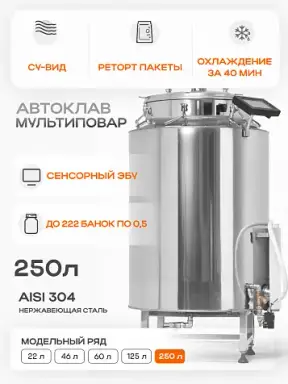
FORKOM LLCRussia
Multipovar 250 L automatic canning autoclave with touchscreen
For thermal sterilisation of products. Volume — 257 L.
31 kW
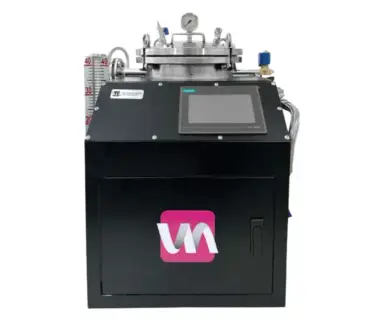
WM Food MachineryMalaysia
Household Vertical Food Steriliser
For thermal sterilisation of products. Volume — 30 L.
3.5 kW
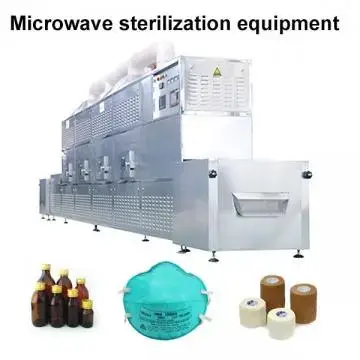
Shandong Loyal IndustrialChina
Microwave Tunnel Heat Treatment System for Seasonings
For thermal sterilisation of products.
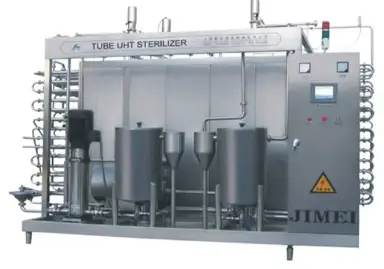
Jimei Food MachineryChina
Milky sterilisation complex
For thermal sterilisation of products.