
AXY-201 chilled meat band-knife slicer and LR-300 slicer
For a direct comparison, obtain specifications for both machines using the same product and operating conditions.
| Highlighted rows show differences | 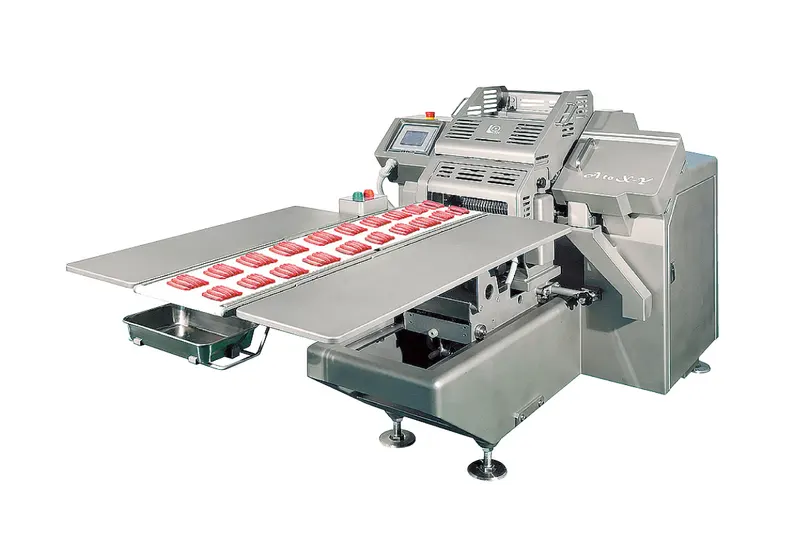 | 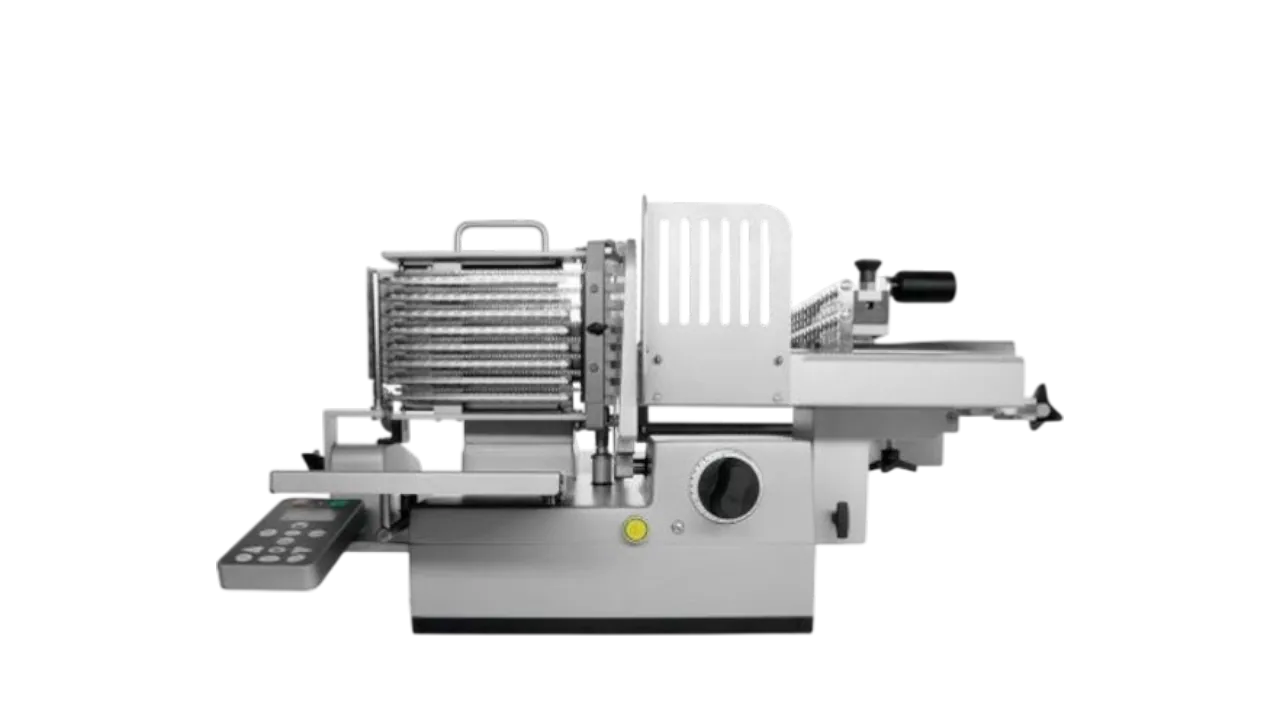 | 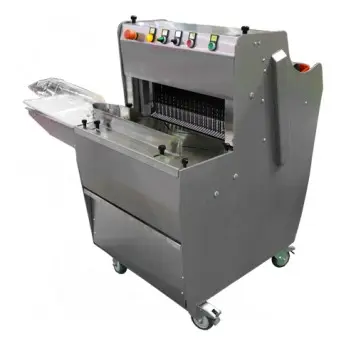 | 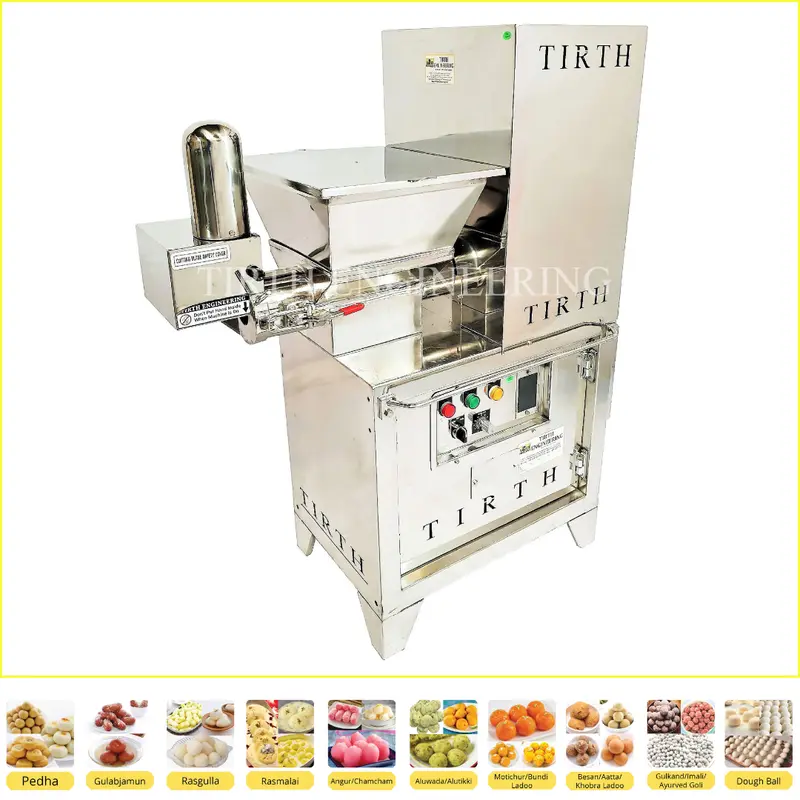 |
|---|---|---|---|---|
| Manufacturer | Nippon Career Industry | TORGMASH JSC | PROFITEX COMPANY | Tirth Engineering |
| Model | AXY-201 | LR-300 | — | 901 |
| Manufacturer country | Japan | Belarus | Russia | India |
| Equipment type | Slicer | Slicer | Slicer | Slicer |
| Power, kW | 1.44 | 0.16 | 2.2 | 0.75 |
| Weight | — | 28.5 kg | — | 130 kg about |
| Beef and pork block applications | Grilled meat portions and pork cutlets | — | — | — |
| Pork jowl and chicken thigh application | Diagonal slices | — | — | — |
| Equipment type | Meat slicer | — | — | — |
| Model | AXY-201 | — | — | — |
| Slicing motion | Vertically reciprocating meat carriage | — | — | — |
| Blade | Straight band knife | — | — | — |
| Feed mechanism | Pressure plate and conveyor belt | — | — | — |
| Maximum product dimensions | Partitioned: two 95 mm lanes, H 20–100 mm, L 600 mm. Open: W 200 mm, H 20–100 mm, L 600 mm. | — | — | — |
| Slice thickness | 1–25 mm | — | — | — |
| Product temperature | −1 to +5 °C. Optimum: +2 to +3 °C. | — | — | — |
| Slicing speed | 40–70 strokes/min, adjustable in steps of five | — | — | — |
| Product feeding | Continuous feed | — | — | — |
| Blade sharpening | Intermittent automatic sharpening | — | — | — |
| Blade cleaning | Water-air spray with scraper | — | — | — |
| Motor power | 200 V AC, 1.44 kW | — | — | — |
| Power supply | 200 V, three-phase, 20 A | — | — | — |
| Compressed air | 260 L/min at 0.5–1.0 MPa | — | — | — |
| Dimensions (W × L × H) | 1,080 × 2,270 × 1,240 mm | — | — | — |
| Machine weight | 570 kg | — | — | — |
| Options | Side table | — | — | — |
| Diameter of disc knife | — | 300 mm | — | — |
| Thickness of slice | — | 0–18 mm | — | — |
| Product infeed | — | Hand | — | — |
| Parameter description | — | Value | — | — |
| Type | — | semi-automatic, with manual product feed | — | — |
| Disc fresus diameter (mm) | — | 300 | — | — |
| Cut thickness (mm) | — | 0...18 | — | — |
| Set engine power (kW, maximum) | — | 0,16 | — | — |
| Rated power consumption | — | 0.27 kW | — | — |
| Engine speed (rpm) | — | 1400 | — | — |
| Disc cutter speed (rpm) | — | 470 | — | — |
| Dimensions | — | 600 550 450 mm | — | — |
| Power supply: current type rated voltage (V) frequency (Hz) | — | alternate 220 50 | — | — |
| Composition of the product | — | Number for modification | — | — |
| Slyser (wheel drive) | — | 1 | — | — |
| Carriage assembly with carriage support and clamping device | — | 1 | — | — |
| Transport pen | — | 1 | — | — |
| Packaging box | — | 1 | — | — |
| Operation manual LR-300 (OM) | — | 1 | — | — |
| Productivity (depending on the bread type), unit/hour | — | — | Up to 450* | — |
| Bread delivery | — | — | mechanical, automatically re-entry | — |
| Cut thickness, mm | — | — | 10, 11, 12, 13, 14** | — |
| Number of knives (depending on cut thickness), unit | — | — | 32 ... 44 | — |
| Maximum height of charge, mm | — | — | 105 | — |
| Minimum height of the charge, mm | — | — | 45 | — |
| Scissor frame amplitude, mm | — | — | 47 | — |
| Power consumption, kW | — | — | 2,2 | — |
| Rated voltage of supply network, V | — | — | 380 (zero-transmission) | — |
| Power of motor-reducor, pushed motor, kW | — | — | 0,25 | — |
| Engine-reducer motor speed, rpm | — | — | 1400 | — |
| Power of electric drive train of knives, kW | — | — | 1,5 | — |
| Dimensions with folded package (D x S x V), mm | — | — | 850 × 1082 × 1148 | — |
| Knife electric motor speed, rpm | — | — | 1400 | — |
| Distance from floor to packing table, mm | — | — | 930 | — |
| Net weight, kg | — | — | 195 | — |
| Package size (box), D x Sh x B, mm | — | — | 1301 × 850 × 1375 | — |
| Gross weight, kg | — | — | 275 | — |
| Type of accommodation | — | — | floor | — |
| Country of production | — | — | Russia | — |
| Model №. | — | — | — | TE/01-A |
| Size | — | — | — | Length – 3 Feet X Width – 2 Feet X Height – 4 Feet |
| Body | — | — | — | Complete Body Food Grade S.S With Mirror Finished |
| Power/Electricity | — | — | — | 1 l c/0.75 kW, 230 V, 1 phase, 4 - 6 A, 50/60 Hz, also available 110 V AC, 1 phase for USA/Canada |
| Power consumption | — | — | — | Per Hour 1 Electric Unit Approx |
| Output Capacity | — | — | — | 2000 to 12000 Pieces Per Hour |
| Machine operators | — | — | — | One operator. The manufacturer states that special qualifications are unnecessary. |
| Product Weight Range | — | — | — | Cutting/Portioning of 1 gm to 100 gm Weight Variation Setting |
| Hopper Capacity | — | — | — | 8 to 10 Kg Depending On Material |
| Air pressure | — | — | — | 3 to 4 Kg of Filtered & Regulated Air Supply Required (Air Compressor Required Extra) |
| Products Range | — | — | — | Pedha (Penda), Gulabjamun, Rasgulla, Rasmalai, Angur, Chamcham, Aluwad/Alutikki, Kachori, Testo, Motichur Ladu, Bundi Ladu, Bessan Lado, Aatta Ladu, Khobra Ladu, Avala Lada, Gulkand Ladu, Imali Goli, Aürved Goli, etc., and many other products. |
| • Variable Output Speed | — | — | — | • Huge Labour & Power Saving Benefits |
| • Simple Weight Setting Mechanism | — | — | — | • Sanitation |
| • All Pieces Are Of Perfect Weight | — | — | — | • Energy efficient machine |
| • Full body of food stainless steel with mirror trim | — | — | — | Operation does not require specialist training |
| • All ISO Standard Material Used | — | — | — | • Lubricant not required |
| • Machine With Aesthetic Design & Appealing Looks | — | — | — | • Easy to clean |
| • Small & Compact In Size With Enclosed Body | — | — | — | • No noise and no pollution. |
For a direct comparison, obtain specifications for both machines using the same product and operating conditions.
For a direct comparison, obtain specifications for both machines using the same product and operating conditions.
For a direct comparison, obtain specifications for both machines using the same product and operating conditions.
For a direct comparison, obtain specifications for both machines using the same product and operating conditions.
Compare the values for weight when choosing between the two models. Request throughput data for your product.
For a direct comparison, obtain specifications for both machines using the same product and operating conditions.