Choosing a filling line for water, juice or milk
Specify the drink and container first. Water, juice and milk place different demands on filling temperature, hygiene and closure handling.
At a glance
Specify the drink and container first. Water, juice and milk place different demands on filling temperature, hygiene and closure handling. In the bottling section of the Cehmash catalog 413 models from 85 manufacturers, marked for the Russian market 274 models.
An article for those who are launching or expanding the bottling of water, juices, milk and other liquids. We will analyze the parameters in the order in which they should be checked, and show what is in the Cehmash catalog.
Start with the product
The bottling method, temperature and purity requirements depend on the product. This is the first filter: a still water machine will not pour a carbonated drink without isobaric valves.
| Product | Filling method | What to check |
|---|---|---|
| Still water | by level, by volume | productivity at your volume, container rinsing |
| Sparkling water, lemonade, beer | isobaric (with back pressure) | pressure, CO₂ loss, plug type |
| Juice, nectar | hot filling or asepsis | product temperature, container heat resistance |
| Milk, fermented milk drinks | clean cold filling or asepsis | CIP cleaning, contact materials, sanitary design |
| Oil, viscous products | piston, weight | dosing accuracy, viscosity |
For example, in a listing SMF hot filling machines for PET The indicated filling temperature is 60–85 °C. U Tessa milk machines — 300–400 bottles per hour, volume from 150 ml to 4 l, made according to 3-A sanitary standards.
Container and cork
The container defines the grippers, rinser and capper. Decide in advance:
- PET or glass. Many monoblocks work with both, but with replaceable parts: grippers, sprockets, capping heads.
- Volume. The larger the bottle, the fewer bottles per hour.
- Stopper: screw, crown, twist-off, stopper for 19 l bottles.
- Your own blow molding or purchased containers. Blowing PET from preforms - a separate machine or a combi-block.
Productivity: count in bottles at your capacity
Manufacturers indicate productivity for a specific volume. At the candy bar YUWEST-4.0 - up to 4,200 bottles/hour for 0.33–0.5 l, up to 2,800 bottles/hour for 1.5 l and up to 2,200 bottles/hour for 2 l.
How to count:
- Divide the daily output in liters by the volume of the bottle - you get the number of bottles.
- Determine the real hours of work: minus washing, changeover, planned stops.
- Divide the bottles between hours and add a 15-25% allowance for growth.
What’s in the catalog by performance class:
| Class | Examples from the catalog |
|---|---|
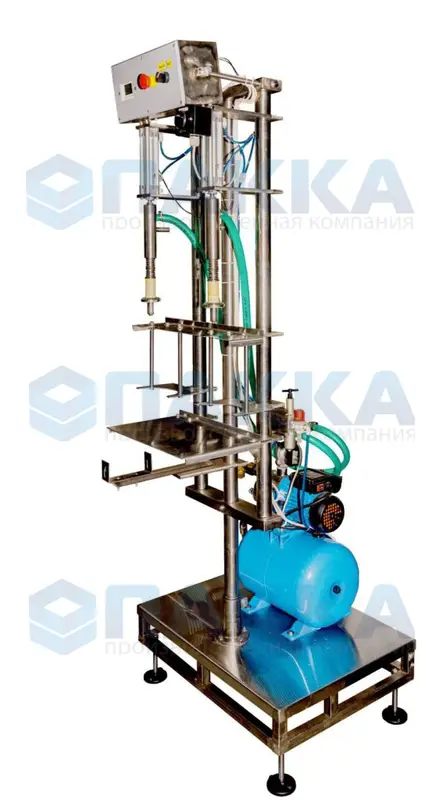
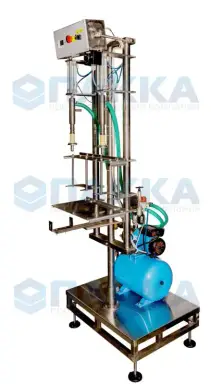
| up to 1,000 bottles/h | semi-automatic BESTEQ PV 10 — 300–1000 bottles/hour, PET and glass; PAKKA line for 19 l bottles — up to 450 bottles/hour |
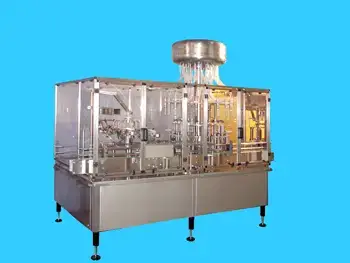
| 1,000–5,000 bottles/hour | monoblock FLIGHT-M — up to 3,500 bottles/hour; YUWEST-2.5 — up to 2,800 bottles/hour |
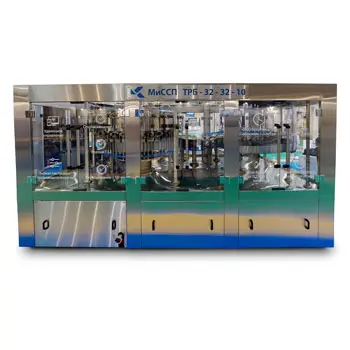
| 5,000–12,000 bottles/hour | monoblock BESTEQ 12/6 — up to 6,000 pieces/hour per 380 ml; filling machine FLIGHT-M — up to 9,000 bottles/hour; triblocks from the Kropotkin MISP plant - up to 12,000 bottles/hour per 1.5 l |
| more than 12,000 bottles/hour | Guangzhou Xili water bottling — 4,500–48,000 bottles/hour; Krones lines |
Line composition
The filling machine is only part of the line. Usually needed:
- product preparation: water treatment, pasteurizer, containers;
- blowing or depalletizing containers;
- rinse aid;
- bottling and capping;
- level and plug inspection;
- labeling and dating;
- group packaging and palletizing.
Check with the supplier which components he supplies himself and who is responsible for the docking.
Sanitation and washing
Sanitation is more important for juice and milk than for water. Check:
- steel grade of contact parts (AISI 304 or 316);
- CIP cleaning without disassembling valves;
- absence of stagnant zones in the product pipeline;
- protection of electrical equipment from water washing.
What’s in the catalog
As of the date of publication in the bottling section 413 models from 85 manufacturers. Most of the models are from Russia (154), China (89), Japan (62) and Germany (28). Marked for the Russian market 274 models, Kazakhstan - 37, Uzbekistan - 36.
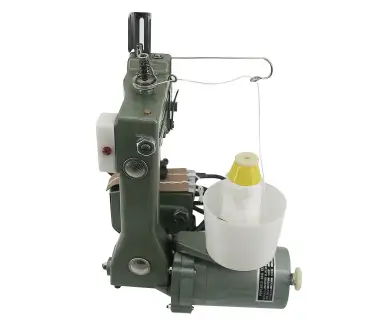
The section also includes related machines: cappers, rinsers, inspection machines, sewing machines for bags. Before comparing, check that the listing shows exactly the filling machine.
Common mistakes
- Compare performance at different volumes. 6,000 bottles/hour for 0.38 liters and 3,000 bottles/hour for 1.5 liters are different machines.
- Buy bottling without capping or rinse aid and then look for a compatible node.
- Ignore readjustment. If there are several formats per shift, the time needed to change parts eats up productivity.
- Take a water juice machine. Hot filling requires different valves and containers.
Questions for the supplier
- What is the performance on my product and bottle size?
- What is the filling method and what is the filling accuracy?
- What formats of containers and caps are included in the kit?
- How long does the changeover take?
- Is there a CIP wash, what kind of steel are the contact parts?
- Which line components are included in the delivery?
- Is there a declaration TR TS 010/2011 and where is the service?
You can compare machines at bottling catalog, and describe the entire problem in selection of equipment. If you are considering a European line replacement, see alternatives of Krones lines.
Frequently asked questions
01Is it possible to pour water and juice on the same line?
It is possible if the machine supports the required filling method and washing between products. Juice is often poured hot, so you need containers that can withstand the temperature and valves for hot product. Check with your supplier to see which products the line can fill without rework.
02How many bottles per hour does a small shop of water need?
Calculate the daily output in bottles and divide by the actual hours of work, taking into account changeover and washing. For small volumes, the catalog includes semi-automatic machines for 300–1000 bottles/hour and monoblocks for 2000–4000 bottles/hour.
03How is a monoblock different from a triblock?
The monoblock usually combines filling and capping. Triblock adds bottle rinsing. Manufacturer names vary, so look at the list of operations on the listing, not just the word in the name.
04Is an aseptic milk line necessary?
For pasteurized milk with a short shelf life, a clean, chilled bottling is sufficient. Asepsis is needed when a product after sterilization or ultra-pasteurization must be stored without refrigeration. The mode is determined by the technologist.
Sources
Live catalogue counts update automatically. Other model and manufacturer information reflects the catalogue at publication. Ask suppliers for prices and lead times. Found an error? Contact us.
Bottling and capping in the catalogue
All models
FLIGHT-MRussia
Spill machine
Fills containers with liquid product. Volume — 2 L.
0.75 kW
FLIGHT-MRussia
Spill Monoblock
Fills containers with liquid product. Volume — 2.5 L.
3 kW
PAKKARussia
PACKA-LD2 semi-machine (PACKA-LD4) in Izhevsk
Fills containers with liquid product. Volume — 0.33 L.
MAGIKONRussia
Smooth sewing machine for sew bags GK-9-2
Fills containers with liquid product.