Equipment for quark production, from milk intake to packing
Making quark involves standardising the milk, pasteurising and culturing it, separating the whey, pressing the curd, cooling and packing.
At a glance
Making quark involves standardising the milk, pasteurising and culturing it, separating the whey, pressing the curd, cooling and packing.
Quark is made from milk in six stages: normalization, pasteurization, ripening, whey separation, cooling and packaging. Each stage has its own equipment, but in a small workshop some of the operations are combined in one bath.
Below are the machines in order of milk movement, with a note of what is needed immediately and what is needed as volumes increase. Numbers of models - by sections of the Cehmash catalog as of the date of publication; The type section includes all machines of this class, not only quark ones.
1. Reception, cleaning and normalization of milk
The milk is taken in a container, cleaned and adjusted to the desired fat content. The fat content of the quark depends on the fat content of the mixture.
| Machine | Why | When needed | Models in section |
|---|---|---|---|
| Capacity | acceptance and reservation of milk | right away | 397 |
| Pump | pumping milk, whey, curd | right away | 250 |
| Separator | separates cream, normalizes milk | for low-fat and separate method | 26 |
| Filter | cleaning milk upon receipt | right away | 131 |
A separator is not necessary if you are working with milk of the desired fat content. For low-fat quark and the separate method, you cannot do without it.
2. Pasteurization
Milk for quark is pasteurized, then cooled to fermentation temperature. In a small workshop it does this long-term pasteurization bath - heating, holding and cooling in one container with a jacket. A plate pasteurization and cooling unit is installed on the flow.
Pasteurizers and baths are collected in the section “Dairy equipment” — 376 models from 103 manufacturers. How pasteurization works and what modes there are are discussed in the hub “Equipment for the production of pasteurized milk».
3. Fermentation
The milk is fermented and kept until a curd forms, then the curd is cut and heated to separate the whey.
- Curd bath - an open bath with a jacket, where the milk is fermented and the curd is cut. Example - bath for the production of quark VTN.
- Quark maker — closed container for ripening on large flows: quark makers TI from Dairy machine plant or closed tanks for ripening.
4. Whey separation and pressing
The curd is transferred into bags or molds and the whey is separated by self-pressing and pressing. In small workshops, self-pressing baths and press carts are used, and pressing and cooling units are used on the production line.
Examples from the catalog:
- Mobile self-pressing bath;
- Press for quark and curds from TAVRUSMET, Belarus;
- Quark pressing unit UPT-400 from Milberg, Kazakhstan.
5. Cooling
After pressing, the quark is quickly cooled to stop acid formation. This is done by cooling and pressing units or separate coolers.
- Quark cooler OT-1 — declared 750 kg/h;
- Quark pressing and cooling unit UPT from ECOMASH — declared 130 kg/h.
Such settings in the directory are often located in the section “Quick freezing equipment” — 256 models, most of them are for other products.
6. Mixing, packaging and labeling
For curd masses and the separate method, curd is mixed with cream, sugar or fillers in mixer, for example in mixer DVAC M-200 for curd masses. Screw pumps are used to pump viscous quark.
Packing and packing:
- Dispenser - packaging in cups and trays, 326 models;
- Horizontal flow wrapper - briquettes in film, 77 models;
- Labeler — 79 models.
Washing and hygiene
The dairy shop is cleaned after each shift. For containers, pipelines and baths you need CIP washing, at the entrance to the workshop - sanitary inspection station. Requirements for products are in TR CU 033/2013 “On the safety of milk and dairy products.”
Where to start: purchasing procedure
- Pasteurization bath and curd bath — determine the volume of the batch.
- Pressing and cooling - select according to the volume of the clot from the baths.
- Packing - according to the packaging format that your customers take.
- Separator and mixer - when you add low-fat quark and curd masses.
- Closed quark makers and line — when processing several tons of milk per day.
Common mistakes
- The yield is calculated based on the volume of milk without taking into account the fat content. The yield of quark depends on the fat content and protein of the milk - check the calculation with the line supplier.
- Buy a press without a cooler. Warm quark continues to sour, and the shelf life decreases.
- Save on washing. Without CIP cleaning, bathtubs and pipes are washed by hand, which is time consuming and a quality risk.
Entire lines in the catalog - in the section “Technological lines”, for example quark production line for 1250–3000 liters of milk. To get a selection to suit your volume, describe the product and performance in selection of equipment. Related technology with a similar set of machines - “Yogurt production equipment».
Frequently asked questions
01What is the minimum equipment needed for quark at the start?
A long-term pasteurization bath or pasteurizer, a curd bath for ripening, a press trolley or a pressing unit for separating whey, a curd cooler and a dispenser for packaging. A separator is needed if you make low-fat or low-fat quark from whole milk.
02How does the traditional method differ from the separate one?
In the traditional method, standardised milk of the desired fat content is fermented. When separated, the milk is separated, the skim milk is made into quark, and then mixed with cream. The separate method requires a separator and a mixer.
03Do you need a closed line with quark manufacturers?
Closed curd makers and automated lines are installed when processing several tons of milk per day. For a small workshop, open curd baths and press carts are cheaper and easier to maintain.
04Where can I find suppliers in my country?
In the Cehmash catalog, select the type of machine and indicate the country in the “Supply market” filter. In the model listing, the “Where to buy” block shows suppliers. The application from the listing is stored in Cehmash, and Cehmash helps to contact suppliers.
Sources
Live catalogue counts update automatically. Other model and manufacturer information reflects the catalogue at publication. Ask suppliers for prices and lead times. Found an error? Contact us.
Separators and centrifuges in the catalogue
All models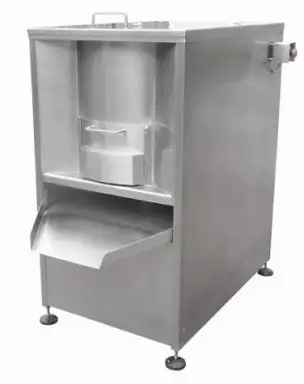
StormBulgaria
Centrifuges for co-products
Separates ingredients into distinct fractions. Throughput — 70 kg/h.
23.5 kW
KronesGermany
Krones UniPure S decanter centrifuge
Separates solids from liquids by centrifugal force in applications such as juice and vegetable oil processing.
11 kW
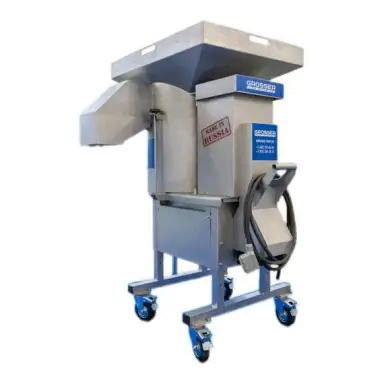
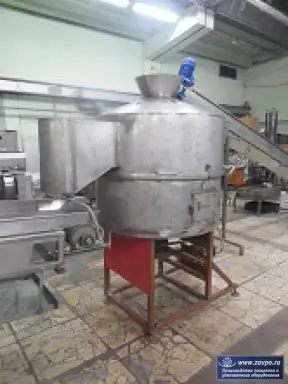
VOPLOSCHENIE LTDRussia
VE centrifuge 215
Separates ingredients into distinct fractions. Throughput — 500 kg/h.
3 kW